

Colon/Rectal Cancer Early Detection in NY
The ACS (American Cancer Society) believe in the prevention of colorectal cancer. They also believe that the best precaution is to find it early by being tested.
Having the polyps located and removed can keep people from developing colorectal cancer. These tests provide the best chances for finding polyps as well as cancer and are made available to anyone who wants them.
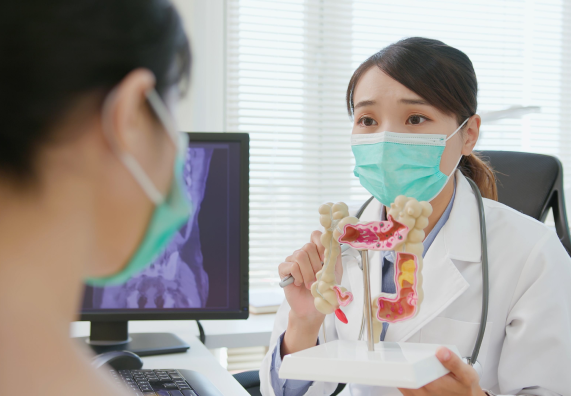
Starting at the age of 50, men and women alike who are at an average risk of developing colorectal cancer need to use one of the following tests –
- Colonoscopy (once every ten years).
- Tests Targeted at Finding Cancer.
- CT colonography (A Virtual Colonoscopy) Once Every Five Years.
- Flexible Sigmoidoscopy Every Five Years.
- Double-Contrast Barium Enema. This Should Be Once Every Five Years.
- A gFOBT Once a Year.
- sDNA Test Once Every Three Years.
A colonoscopy should be performed if the test results show positive. There are highly sensitive versions of the tests above that need to be used alongside the take-home multiple-sample methods. Having an FIT or FOBT while undergoing a digital rectal exam at the doctor’s office will not be an adequate screening.
Are Rectal Exams Enough for Screening to Find Colorectal Cancer?
In a DRE (digital rectal exam) the doctor examines the rectum with a gloved finger and lubrication. While a DRE is usually included as a part of your routine physical examination, it’s not recommended that it be used as a ‘stand alone’ test regarding colorectal cancer. It is a simple test and not usually painful. It can detect masses within the anal canal or the lower rectum. On its own, however, it’s not a very good test for the detection of colorectal cancer due to its limited scope.
Doctors many times will find small amounts of stool within the rectum during a DRE. Checking the stool obtained in this manner for bleeding, using and FIT or FOBT, isn’t an acceptable way of screening or detecting colorectal cancer. Research shows that an examination of this type of stool, misses over 90% of all colon abnormalities, which includes most cancers as well.
People Who are at High Risk for Colorectal Cancer
If you are someone who is at high risk for developing colorectal cancer you need to start screening before you reach the age of 50. Or you should be screened a little more often. Here are some of the conditions that put you at a higher risk than average:
Strong Family History of Polyps or Colorectal Cancer.
Personal History of Crohn’s Disease, Ulcerative Colitis, or Inflammatory Bowel Disease.
Family History of hereditary forms of colorectal cancer syndrome like FAP (familial adenomatous polyposis), or HNPCC (hereditary forms of non-polyposis colon cancer).
Personal History of having adenomatous polyps or colorectal cancer.
There are tables you can ask your doctor for that have screening guidelines listed which you can study. They show the risk factors involved and who is at high risk for colorectal cancer, based on some specific risk factors. There are people who have more than just one risk factor. Refer to the table and then have a talk with your doctor concerning your risks. You doctor will be able to suggest your best course of action.
Featured Articles


Free case evaluation
Talk With a New York Cancer Lawyer
If a delayed diagnosis changed your family's future, Porter Law Group can review what happened and explain your options.